
On Suffering: Can Spirituality Help People With Idiopathic Hypersomnia Cope?

Being alive means witnessing the undeniable interwoven relationship between the mind, body and spirit.
The times when I have felt most physically ill are also the times when my own mental health was at its worst and I lacked purpose or understanding of what I was supposed to do with my life.
Spiritual anguish does not necessarily mean that you lack a religious practice (I don’t even like using the word “spiritual” here but have yet to find a more appropriate term) but instead lack connection and community.
Spiritual alignment for me feels like the universe is conspiring in my favor. A flow of energy and Madison-oriented process. Despite my skepticism of organized religion, I respect people who try to make the world a better place and think and write and preach extensively on achieving peace.
I like to say that I’m more interested in the people who do incredible and interesting things, than the actual things themselves.
I think that for people who experience great suffering, they try to make sense of it in order to understand the role that suffering played in their life, and then to move forward. I’ve long been curious how humans have thought about pain and suffering on a spiritual, mental and physical level.

Making sense of the pain idiopathic hypersomnia causes
Other than my own suffering with chronic illness including idiopathic hypersomnia, my own concept of suffering is one that was greatly informed by my upbringing within the Catholic church.
Catholics are taught that suffering is desirable and that suffering is worth it because we go to heaven and don’t have to suffer anymore. Jesus, widely considered the most depicted person in history, and a central figure of Catholicism, is most famous for his pain and suffering (and from what I assume was the worst moment of his life), getting nailed to a cross by Roman soldiers.
As a teen I became interested in Teresa of Ávila, a Carmelite nun who wrote about pain and suffering in a really interesting way, believing pain could become a path to deeper and inner freedom.
Teresa was apparently constantly ill with migraines, heart problems and chronic pain. She was also famous for describing this idea of “transverberation” where during prayer, an angel pierced her heart with a fiery tipped spear causing her to feel simultaneous pain and overwhelming joy.
Building up my syllabus on suffering, a couple years ago while in the throws of exhaustion, I discovered the teachings of Thich Nhat Hanh, a Vietnamese buddhist monk, peace activist and father of "mindfulness"; teachings who has lectured extensively on suffering.
Thich Nhat Hanh had witnessed the horrors of the Vietnam war and was exiled from his native country for refusing to take a side, yet still believed deeply that suffering is a product of our own mind.
Roughly, Buddhism teaches that you can feel physical pain, experience anguish and hardship, yet still be peaceful and experience no suffering.
Coping with idiopathic hypersomnia
Given these religious luminaries, I’ve long been trying to reframe my relationship with my own pain and suffering.
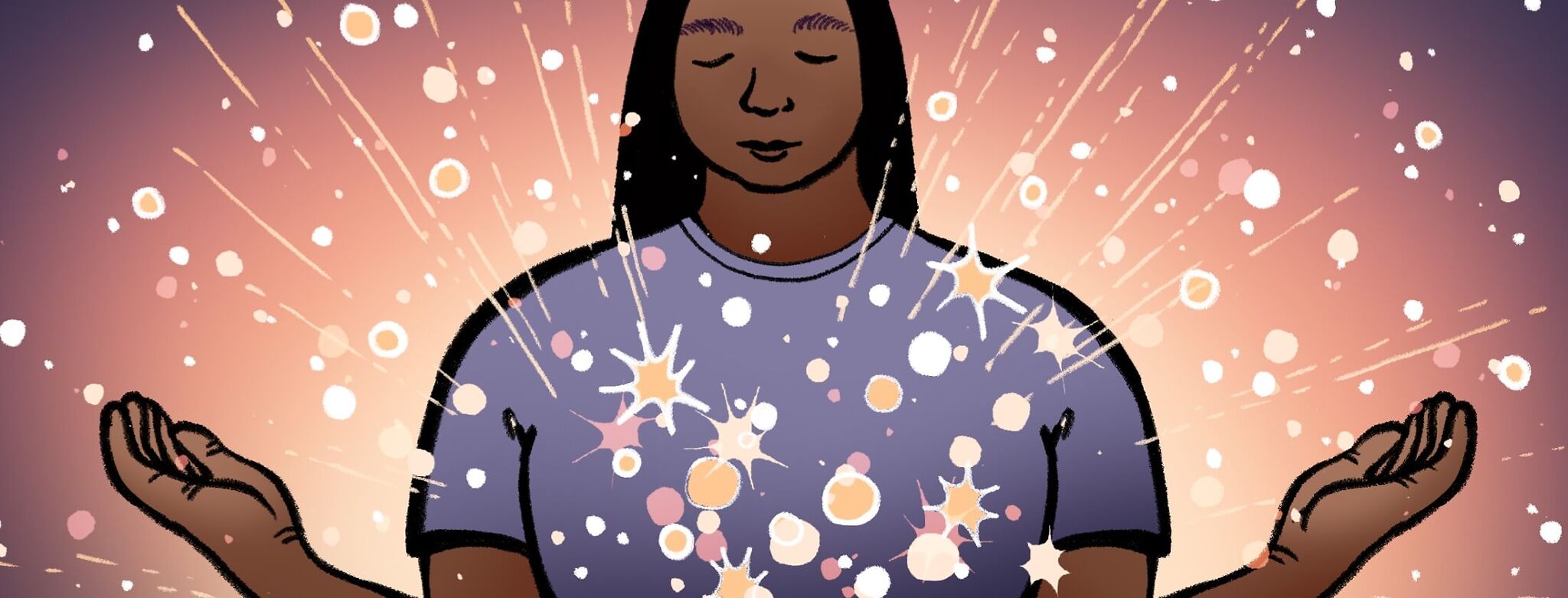
I wake up every morning in pain and fall into my bed every evening, exhausted with the same growing pain. But I believe that there is some truth to working on the mind and those sparks translating to the body. I’ve recently dedicated myself to a meditation practice that has not cured me (lol), but provided moments of clarity and reprieve.
My hope is that I will continue to build my understanding of suffering and hopefully one day have the tools to transcend even the most exhausting of days.
Living with idiopathic hypersomnia, it’s difficult for me to trust my body. Being in constant pain and worried that I won’t have enough energy to get through the day feels like an impediment to living a fulfilling life.
But when I throw on the Buddhist lens that I can, it I try, to transcend this suffering I can for a moment imagine a much lighter and awake existence.
Join the conversation