
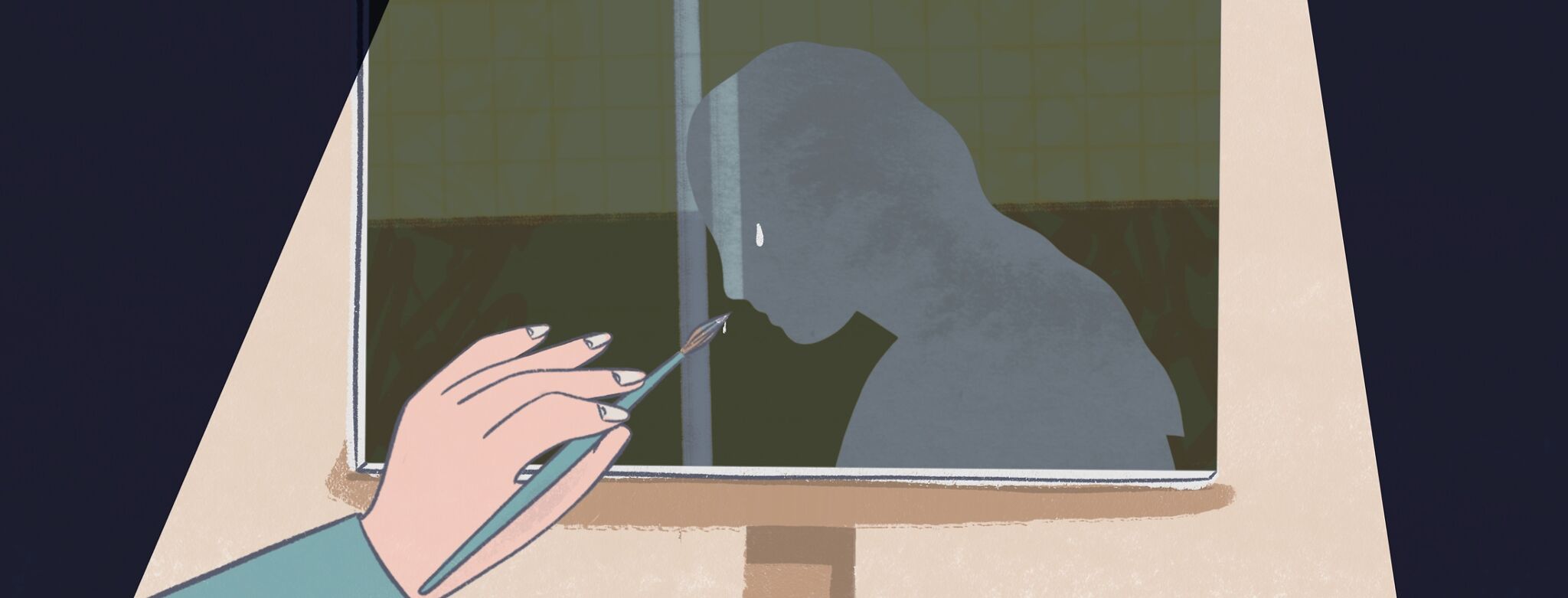
The Artist: Finding Meaning In The Pain of Idiopathic Hypersomnia

In June I fulfilled a lifelong dream of visiting the Frida Kahlo museum in Mexico City. Frida Kahlo was a Mexican artist known for her self-portraits that interwove themes like chronic pain, identity, and Mexican cultural heritage. Born in 1907 in Mexico City, Frida spent most of her life in her family home, La Casa Azul.
At 6 years old she contracted polio, and twelve years later she nearly died in a bus accident that caused extensive injuries to her spine, pelvis, and legs. She underwent countless surgeries throughout her life in an attempt to repair the damage.
Frida Kahlo and the architecture of chronic pain
Frida lived with chronic pain and was often bed-bound, forced to wear restrictive plaster and steel casts as she healed. Despite it all, she was committed to her art. Her will to live was tied to her ability to paint.
She once said, “I am not sick. I am broken. But I am happy to be alive as long as I can paint.”
At times, Frida painted while in bed, setting up a mirror and easel so she could work while lying down. At the museum, I was able to walk through her former bedroom at Caza Azul, preserved with her bed and easel, poised for manipulation into another masterpiece.

Navigating idiopathic hypersomnia and the "Dark Ages" of medicine
As an artist myself, I’ve always admired Frida’s determination to memorialize her lived experience of pain, suffering and joy, living with chronic pain.
Much of my own journey with idiopathic hypersomnia and Ehlers-Danlos syndrome has been an overwhelming craving to be heard and to have my pain and experience to be acknowledged.
Burned in my memory are the endless stream of comments made by medical professionals that my pain and exhaustion were simply “all in my head”. Sometimes I wonder if half of the pain I’ve suffered is actually anxiety and depression induced by twenty years of medical gaslighting.
One time after getting a sleep study done the reviewing pulmonologist said that he didn’t know what was wrong with me but that regardless it was the “dark ages” for sleep disorders and all he could really do was prescribe me ritalin. Dark ages indeed.
Art as a necessary tool for survival
Like Frida, I paint not because I like to but because it is necessary for me to create as a way to survive. Being able to creatively express myself has allowed me to heal parts of me that I never thought possible.
One of Frida’s self-portraits, El sueño (La Cama), recently sold for $54.7 million, making it the most expensive artwork by a female artist ever sold at auction. El sueño, meaning “the dream” and la cama meaning “the bed”, depicts Frida asleep in a bed while a skeleton, symbolizing death, lays in identical position above her, covered in explosives.
The paradox of valuing the image of suffering
The piece reflects sleep not as rest but as an escape from suffering and death as a close companion. I’m sure there are many scholarly interpretations of this painting, but to me, I find it ironic that society could value a depiction of chronic suffering so highly, when that same society so often dismisses the lived pain of those who endure it every day.
There are several incredible artists, living artists, who document life living with chronic illness. One of my favorites is KYRIANNA, a watercolor artist on the West Coast who has lived with chronic pain since she was twelve years old. Her self portraits and commissions are stunning, interweaving natural elements like flowers, vines, weeds and water with the human body and self portrait.
A call to hear the voices of living artists
I hope that one day our society learns to value living artists and the experiences of those suffering from chronic illness, not only when their pain is depicted through art, but while they are still alive, creating and asking to be heard.
Join the conversation