
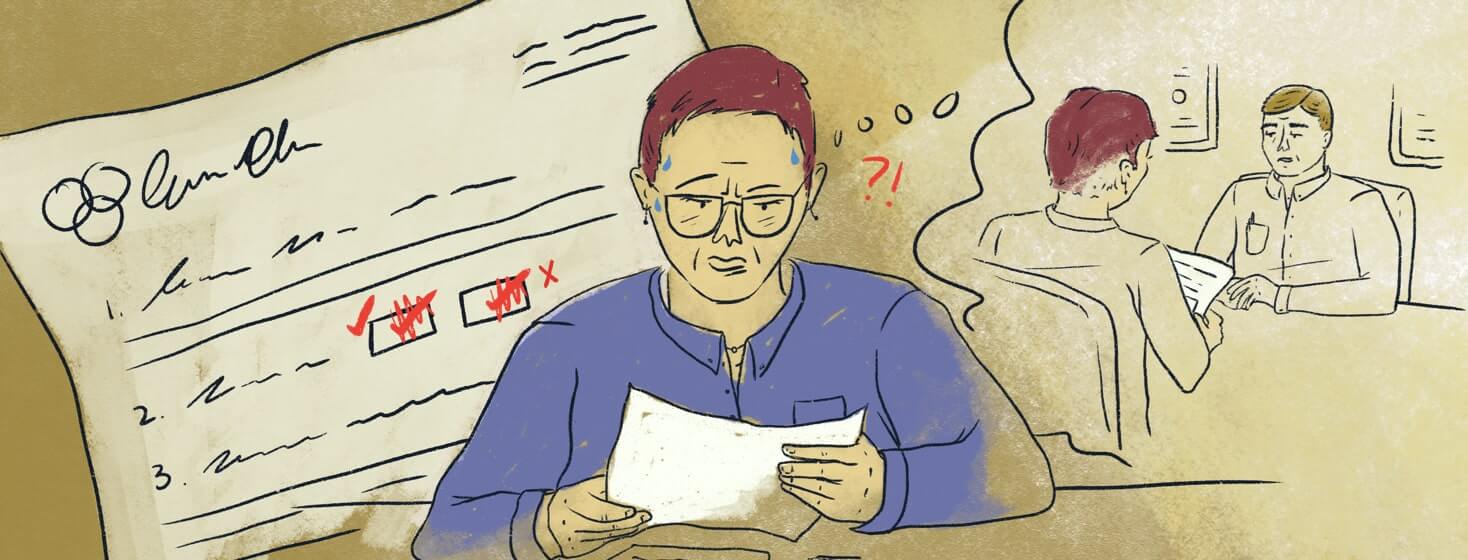
My Workplace Accommodation Was Denied

I felt extremely vulnerable when I requested a workplace accommodation. I feared that my employer would not understand idiopathic hypersomnia and think I wanted special treatment.
That was not it at all. I wanted a fair opportunity to do my job.
Like many people with a disability, I needed help so that I could perform on the same level as individuals without a disability. So, when an accommodation request is denied, it can feel discouraging, confusing, or even personal. But a denial does not mean that it is the end of the process.
The accommodation process is intended to be interactive, not one-sided
The interactive process is a collaborative discussion between the employee and employer to understand what the workplace limitations are and explore options for an accommodation. Neither party should make demands, rather work together to figure out an effective solution.
While not required, your accommodation request should be in writing. Keep records of requests, responses, medical submissions, meeting notes, and follow-up communications.
Documentation helps create a timeline and reduces misunderstandings. It also allows employees to demonstrate continued engagement in the interactive process. You never know how the process may unfold down the line, but you will thank yourself should you need the documentation later.

What to do when your IH accommodation request is denied
If your request is denied, it is important to understand why. Not all denials mean the same thing. An employer may determine that your documentation did not provide the necessary information, that the accommodation as requested would create a hardship, that the accommodation does not address a workplace limitation, or perhaps a more reasonable option may be available. Once you understand the reason for the denial, you can address it specifically.
You may need to provide clarification from your provider or a more detailed explanation of how your limitation affects your ability to complete a specific job task. While it is possible that an accommodation can help you in completing a task and make you feel better (or prevent you from feeling worse), accommodations are about equal access in the workplace. Focus on connecting the accommodation to the actual work barrier rather than describing how the accommodation will be better for your health.
Exploring alternative workplace solutions for your IH symptoms
It may be helpful to suggest other accommodations that could be effective. For example, if a schedule change is denied, there may be flexibility in break times, work location, task structure, or other workplace supports that are just as effective.
Continue participating in good faith. The interactive process works best when both parties actively engage. Refusing to discuss alternatives can make resolution more difficult.
Escalating a denied idiopathic hypersomnia request internally or externally
If you cannot agree on an effective and reasonable accommodation review your employer’s internal processes. Many employers have procedures for reconsideration, appeals, or a human resources review. Following established processes can sometimes resolve concerns more quickly than escalating externally.
However, sometimes it will be necessary to escalate the denied accommodation externally.
External processes are lengthy and can take an emotional toll on everyone involved, to include families and support systems. As a result, it is necessary to ask yourself if your civil rights were violated or if you are disappointed by your employer's decision not to grant the accommodation as you requested.
If you believe you have been subjected to unlawful discrimination, you may be able to file a charge of discrimination with the Equal Employment Opportunity Commission (EEOC).
You may file a charge online or in person. Do not delay because there are strict time limits for filing a charge. Additionally, it is unlawful for an employer to retaliate against an employee who requests an accommodation or files a charge of discrimination.
Accommodation conversations can be challenging, but they are intended to be collaborative. Staying engaged and open minded during the interactive process can lead to more productive dialogue. However, if that is not the case, it’s important to be aware of the internal and external processes available to you.
Join the conversation